InSon's Private Space

Hello, I'm In Son, a Research Fellow with a Passion
for Data Science Education and an aspiring Music Composer.

InSon Zeng - Intelligence,
Self-regulation, Zeal


I am In Son! I am a researcher who loves to explore learning at scale and learnersourcing in asynchronous learning environment. I had a background in statistics and mathematic education, which shaped my research direction to focus on creating personalized contents and messages in online educational platforms to engage learners.

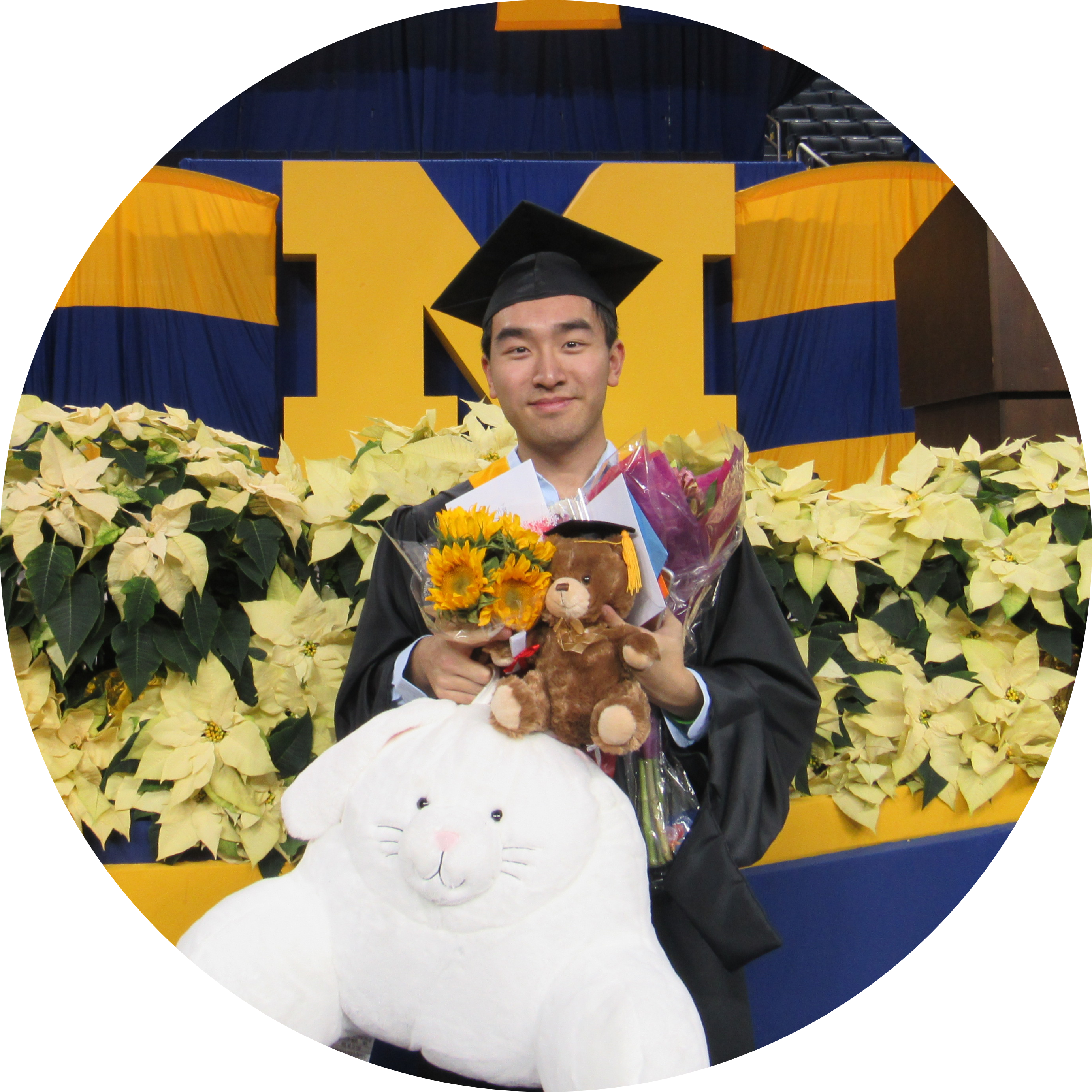
profile picture

Selected Music / Compositions

More Music and compositions are listed in the page bottom. For a full catalog and audio players, welcome to browse my music gallery as a composition gallery.

Why learning at scale?

Because I care about making high-quality, personalized education more accessible across learning contexts. Starting to teach students at the age of 13 enabled me to see the need of scalable student support assisted by artificial intelligence (of course, with ethical use), since teachers cannot always provide one by one guidance. This interest has developed into my research on AI-assisted learning systems, including Intelligent Music Theory Tutor that connect optical music recognition, knowledge retrieval, and pedagogical explanation. Through accepted research at KDD 2026 and CITERS 2026 and various journals, I continue to explore how artificial intelligence can support scalable, contextualized, and human-centered learning (with primary focus on music education and concert experience).

Why does personalized learning experience matter?

As the use of computer is growing in popularity, I started to see a decrease in student engagement in traditional classes. Personalized learning matters because students do not learn from the same materials, at the same pace, or in the same way. My recent research focuses on systems that adapt educational support to the music learner’s repertoire, moment, task, and context. For example, my work on bar-anchored music theory tutoring links theoretical concepts to the exact bars students are practicing, while my concert knowledge navigation research explores how live musical moments can trigger silent, just-in-time learning cues. These projects reflect my broader vision of transforming one-size-fits-all instruction into adaptive learning experiences that are contextual, actionable, and pedagogically meaningful.

What are some of my research hypotheses about learning analytics?

First, for MOOC online courses, learning gain is higher

  1. with spatially contiguous verbal message than with video subtitles (because of the lower cognitive load)
  2. using keywords than with verbatim explanation
  3. by watching accelerated video speed (e.g. 1.25x, 1.5x) over the original speed
  4. with content-heavy learning than content-free learning

For MOOC online courses, learners prefer

  1. spatially contiguous verbal comments over video subtitles (because comments locate more closely to the learning material such as codes)
  2. spatially contiguous verbal comments over slides (because all comments are time-coded, unlike there are extraneous contents in slides)
  3. accelerated video speed (e.g. 1.25x, 1.5x) over the original speed
  4. viewing instructor’s face in lectures over screen share only lectures
  5. background music interspersed with lecture sections (use signposting to reduce cognitive load)
  6. content-heavy learning than content-free learning

Learners generally mind-wander less with

  1. spatially contiguous verbal comments over video subtitle (because comments locate more closely to the learning material such as codes)
  2. spatially contiguous verbal comments over presentation slides (because all comments are time-coded, unlike there are extraneous contents in slides)
  3. accelerated video speed (e.g. 1.25x, 1.5x) over the original speed

What are my vocational hobbies?

Music has always been my favorite pastime. I spent 8 years on self-teaching my music composition and tuning capabilities, and I am currently hosting music composition classes, workshops and reading group activities.


Recently I am emphatic about music information retrieval methods and experimenting how music can be leveraged as a psycho-social intervention in cognitive behavioural therapy. In addition, I am innovating AI-leveraged music educational technology to augment concert experience.